Walking the Lake Minnewanka Trail Along the Largest Banff Lake
Reviewed by Lenka Smidova, Founder, Canmore Travel
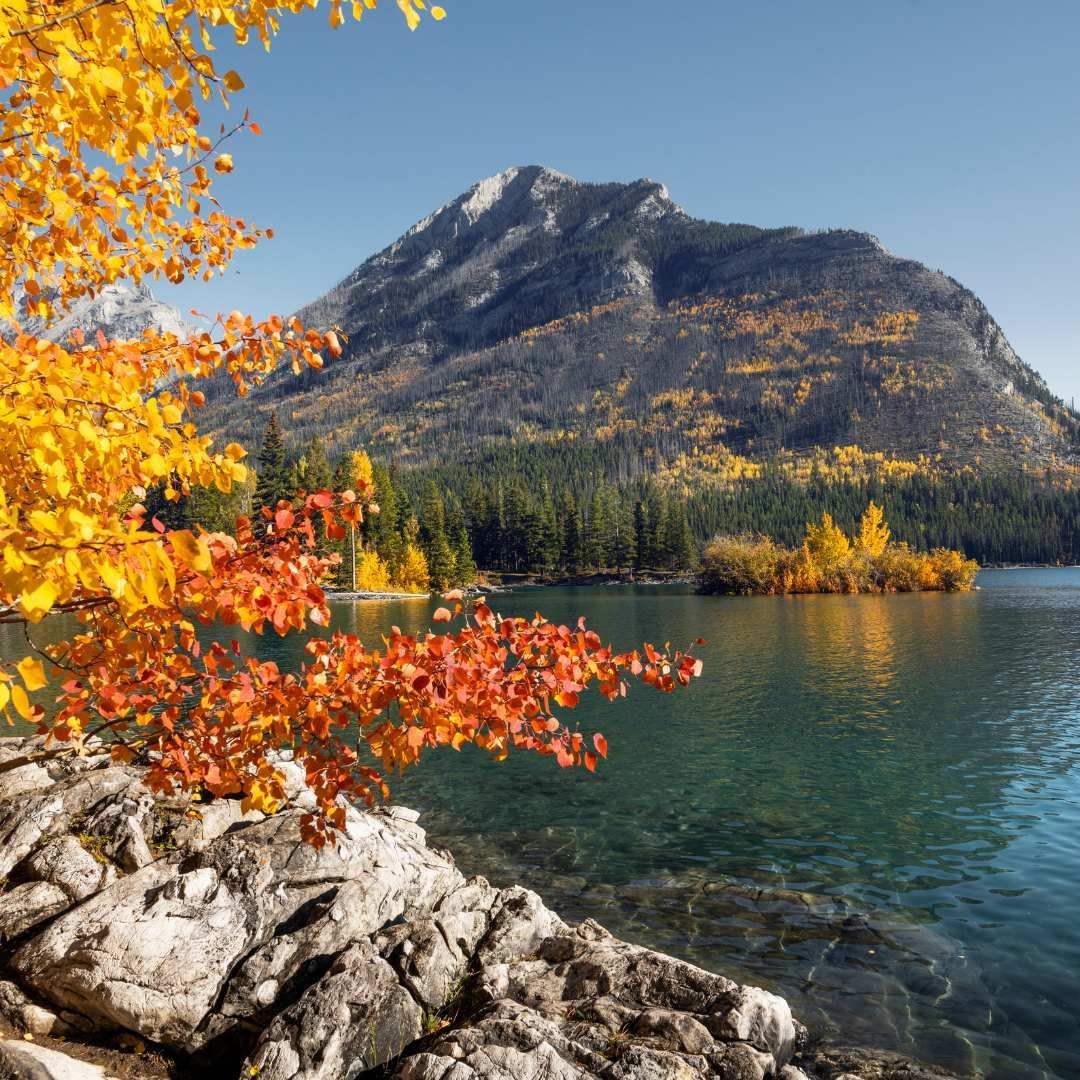
Lake Minnewanka is the largest lake in Banff National Park, 21 kilometres long and 142 metres deep, and the walking here is some of the most accessible in the park. Two easy trails leave from the same day-use area northeast of Banff: the flat Lakeshore Trail, which you can walk as far as you like, and the 3.7-kilometre round-trip Stewart Canyon Trail. Both are suitable for all fitness levels, and the lake carries one of the strangest stories in the Rockies: a resort town sits submerged beneath the surface.
Getting to the trailhead
The trails start at the Lake Minnewanka day-use area, reached by a short loop road about 15 kilometres northeast of Banff townsite. There is a large parking area at the western end of the lake, and both the Lakeshore Trail and the Stewart Canyon Trail begin from here. A Parks Canada day pass is required, and there is no public shuttle from Canmore to the lake.
The Lakeshore Trail
The Lakeshore Trail runs along the north shore from the day-use area and goes essentially as far as you want to walk. Most visitors explore the first 3 to 5 kilometres and turn back, which is a flat, easy out-and-back with the lake beside you the whole way. Serious hikers can continue for hours into the backcountry, but you do not need to go far to get the views.
The Stewart Canyon Trail
The most popular short walk here is the Stewart Canyon Trail, a 3.7-kilometre round trip from the parking area. It follows the lakeshore briefly, then turns into a short canyon section cut by a mountain creek, ending at a bridge over the water. It is wide, low, and suitable for all fitness levels, and it is a genuinely good alternative for anyone who wants a quiet walk without the crowds at Johnston Canyon. Bighorn sheep are regularly seen along the access road and on the canyon rim.
What you'll see along the way
A submerged town. The name Lake Minnewanka comes from the Stoney Nakoda language and means "Lake of the Water Spirit." Beneath the surface sits Minnewanka Landing, a resort town flooded in 1941 when a dam raised the water level by roughly 30 metres. The buildings and foundations are still intact on the lake floor, making this one of the only freshwater scuba diving sites in Alberta.
Bighorn sheep. The road to the lake is one of the most reliable places to see bighorn sheep in all of Banff, grazing the grassy slopes and verges year-round.
The evening wildlife window. In the two hours before sunset, elk, mule deer, black bears, and coyotes move through the lakeshore area in numbers midday visitors rarely see. It is one of the most consistent dusk wildlife spots in the park.
When to go, and staying safe
The trails are walkable spring through fall, and the lake is beautiful in every season. For wildlife, aim for the evening window before sunset. Whenever you go, give animals plenty of room: keep at least 30 metres from elk and 100 metres from bears. The wildlife near the lakeshore is used to visitors but remains genuinely wild.
Let us handle the timing
The best wildlife viewing at Lake Minnewanka happens right at dusk, exactly when most day visitors are heading home, and there is no public transport out to the lake. Canmore Travel runs a private guided evening tour timed to catch that window, with pickup across Canmore, Harvie Heights, and Banff.
Frequently asked questions
How long is the Stewart Canyon trail at Lake Minnewanka?
About 3.7 kilometres round trip from the day-use parking area. It is flat, easy, and suitable for all fitness levels.
Is there a lakeside walk at Lake Minnewanka?
Yes. The Lakeshore Trail follows the north shore from the day-use area, and most visitors walk the first 3 to 5 kilometres as an easy out-and-back.
When is the best time to see wildlife at Lake Minnewanka?
The two hours before sunset. Elk, deer, and bears move through the lakeshore area, and bighorn sheep are common on the approach road year-round.